
Our Products
DIESEL FUEL EN590 SPECIFICATIONS
The EN 590 had been introduced along with the European emission standards. With each of its revisions the EN 590 had been adapted to lower the sulphur content of diesel fuel – since 2007 this is called ultra low sulphur diesel as the former function of sulphur as a lubricant is absent (and needs to be replaced by additives).
The quality of European diesel fuels is specified by the EN 590 standard. While these specifications not are mandatory, they are observed by all fuel suppliers in Europe. 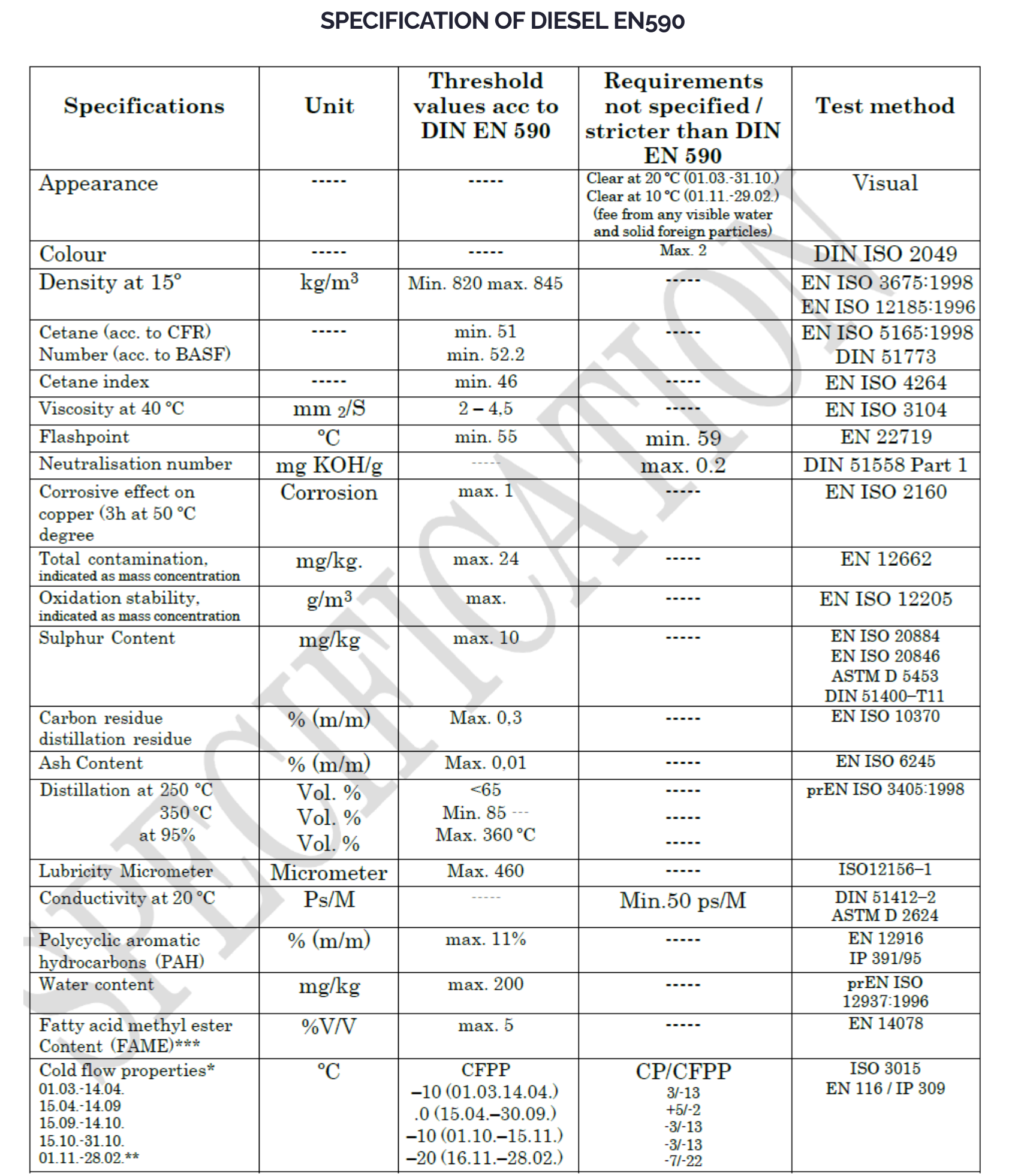
Automobile diesel en 590 is intended for application in diesel engines. Diesel motor fuel quality meets the requirements of European Standard EN 590. For operation in the conditions of a temperate climate following marks of fuel diesel automobile EN 590 are offered: Grade C – limiting filterability temperature -5 ° C; Grade D – limiting filterability temperature -10 ° C; Grade E – limiting filterability temperature – 15 ° C; Grade F – limiting filterability temperature -20 ° C. The entire volume of produced diesel fuel quality meets the requirements for fuels for vehicles of Euro 4 and Euro 5. Low sulfur content in diesel EN 590 reduces emissions of sulfur oxides into the atmosphere, which is especially important for for inhabitants of big cities.
DIESEL FUEL EN590 SPECIFICATIONS
What is Jet A-1?
Jet A-1 is the world’s most widely used commercial aviation fuel. It is a kerosene-type fuel designed specifically for gas turbine engines, including turbofan and turboprop aircraft operating across global aviation networks.
It is defined and controlled through international specifications to ensure consistent performance, safety, and compatibility across aircraft types and operating environments. These specifications govern properties such as freezing point, flash point, and combustion characteristics. 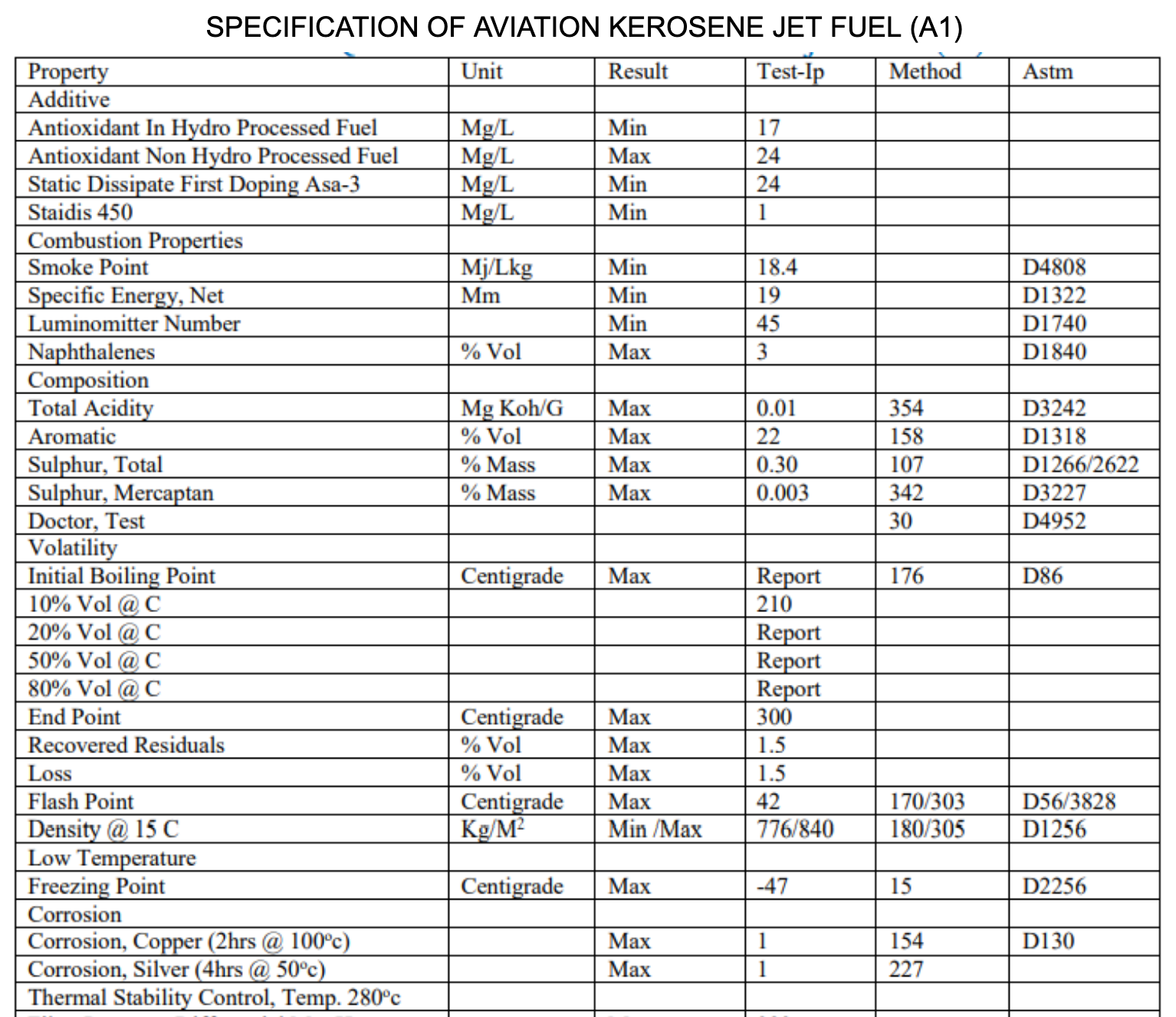
TUZKOLMUNAIGAZ OPERATING KAZAKHSTAN REFINERY Jet A-1 is fully compliant with the AFQRJOS Check List. It meets the requirements of Def Stan 91-091 (Issue 11), ASTM D1655 (latest issue), and the NATO F-35 specification. This ensures that fuel quality, traceability, and regulatory compliance are maintained at every uplift.
GRANULAR SULFUR (99.8% PURITY)
Kazakhstan Granular sulfur, also known as sulphur powder, is a non-metallic elemental with chemical formula-s. It is light yellow brittle crystal or powder with special odor, insoluble in water, slightly soluble in ethanol and ether, and easily soluble in carbon disulfide. As a flammable solid, bulk sulfur powder is mainly used to make dyes, pesticides, matches, gunpowder, rubber, rayon, etc.In production, pure sulphur powder is often processed into colloidal suspension for the prevention and control of diseases and pests. It is safe for people and animals and is not easy to cause drug damage to crops. Granular sulfur is the main source of sulfuric acid, and sulfuric acid is an indispensable intermediate for chemical and manufacturing. The fertilizer industry also uses sulfuric acid to produce phosphate, nitrogen fertilizer, potassium fertilizer and sulfate fertilizer..
GRANULAR SULFUR (99.8% PURITY)
Kazakhstan Granular sulfur, also known as sulphur powder, is a non-metallic elemental with chemical formula-s. It is light yellow brittle crystal or powder with special odor, insoluble in water, slightly soluble in ethanol and ether, and easily soluble in carbon disulfide. As a flammable solid, bulk sulfur powder is mainly used to make dyes, pesticides, matches, gunpowder, rubber, rayon, etc.In production, pure sulphur powder is often processed into colloidal suspension for the prevention and control of diseases and pests. 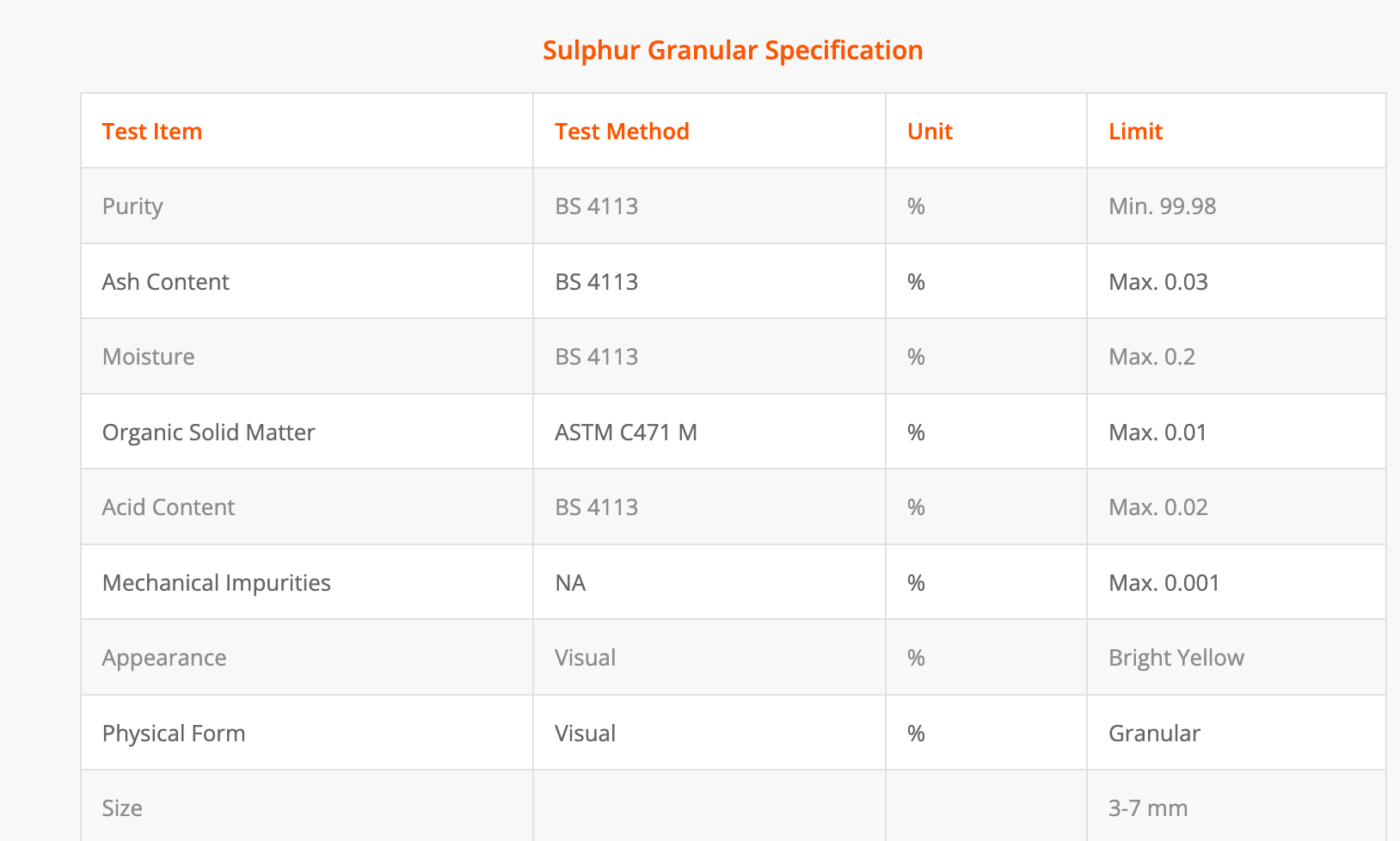 It is safe for people and animals and is not easy to cause drug damage to crops. Granular sulfur is the main source of sulfuric acid, and sulfuric acid is an indispensable intermediate for chemical and manufacturing. The fertilizer industry also uses sulfuric acid to produce phosphate, nitrogen fertilizer, potassium fertilizer and sulfate fertilizer.
PETROLEUM COKE
Refinery Petroleum coke and petcoke are all designations that belong to a by-product of the oil refining process. It is a carbon-rich solid. Petroleum coke can be used for various industrial and commercial applications, not to mention as an energy source.
Given the importance of these uses, petroleum coke is an essential part of the global energy landscape.
So, continue reading this guide to explore petroleum coke and enrich it with the necessary information for anyone interested in the oil & gas sector to view this vital resource.
What is Petroleum Coke?
As mentioned above, petroleum coke is a by-product of the oil refining process. It is a carbon-rich material and some other heavy, sulfur, and hydrogen.
It structurally belongs to the Coke family. Petroleum coke is generally used in various manufacturing processes such as smelting, carbon black production, and other industrial processes that require high-temperature activation. 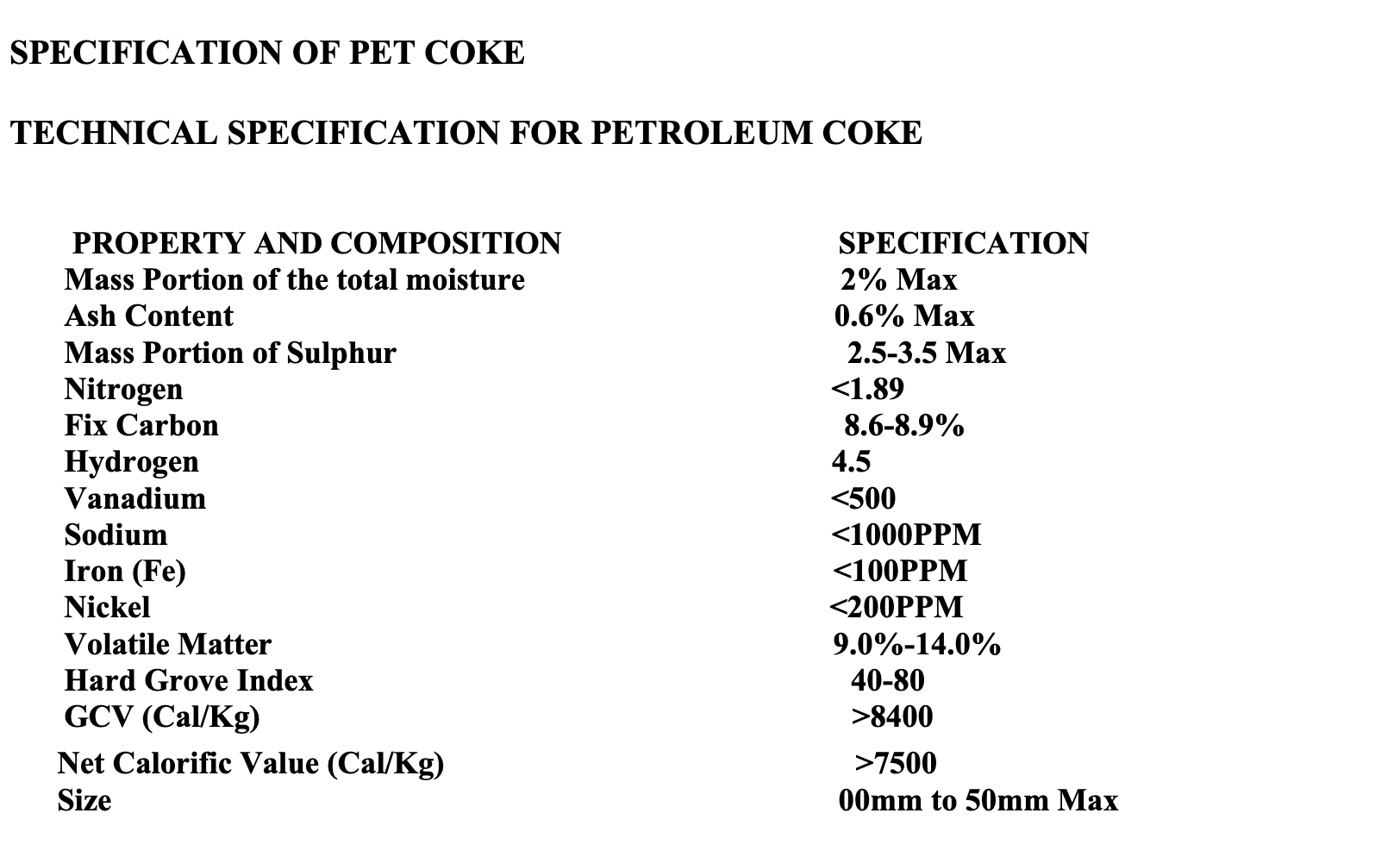
Petroleum coke can also be obtained from some unconventional sources. One of these sources is the manufacture and processing of Bitumen (Asphalt) extracted from oil sands in refineries.
LIQUEFIED PETROLEUM GAS
Liquefied petroleum gas or liquid petroleum gas (LPG or LP gas), also referred to as simply propane or butane, are flammable mixtures of hydrocarbon gases used as fuel in heating appliances, cooking equipment, and vehicles.
It is widely used alternative fuel. It has substantial reserves due to its dual origins from natural gas processing and crude oil refining. Liquefied Petrol Gas (LPG) powered passenger cars have about 10% lower tailpipe CO2 emission than comparable gasoline powered cars. 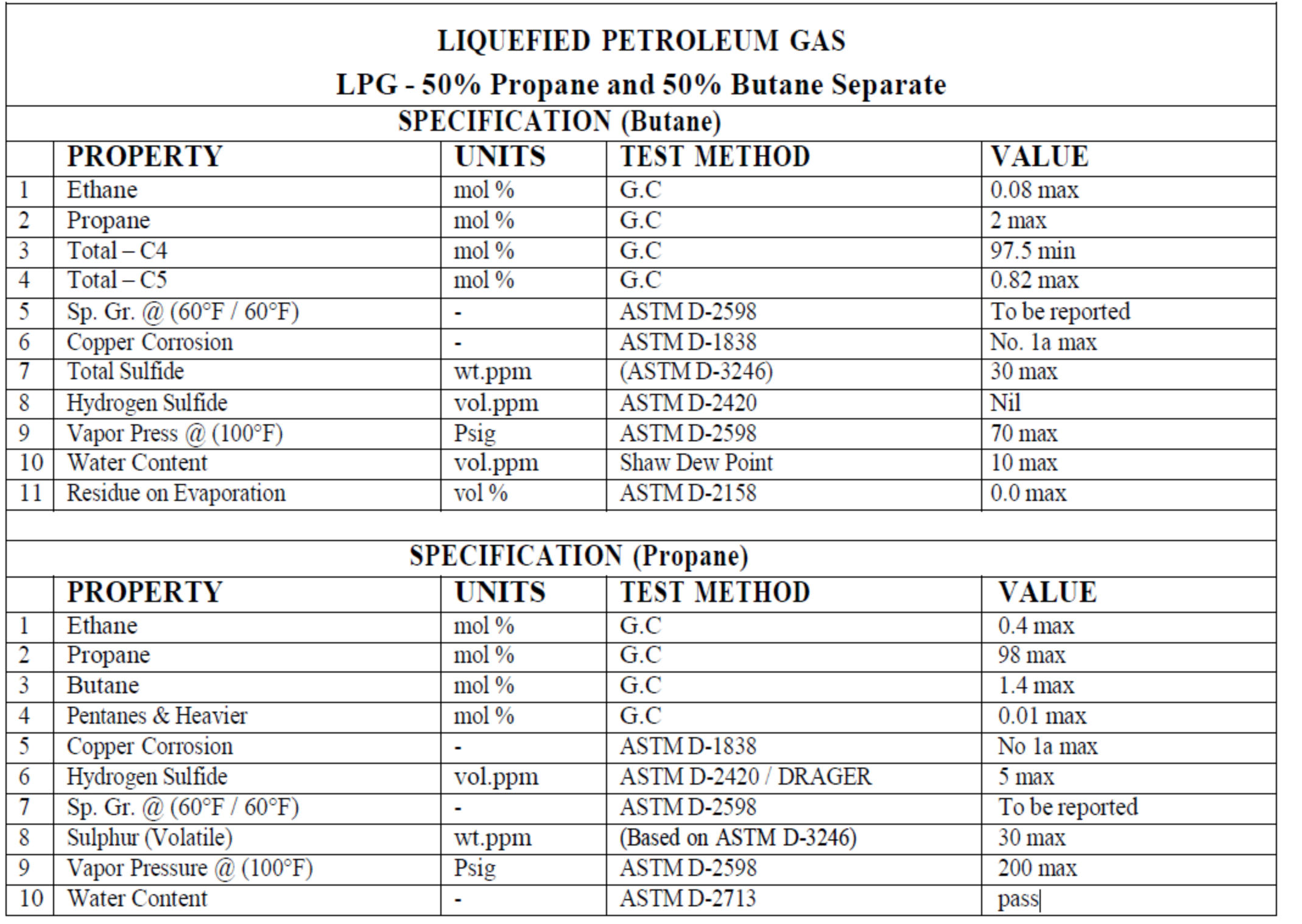 When compared to a diesel car, there is no significant CO2 emission reduction per km driven; however, LPG powered vehicles do have substantially lower NOx emissions than diesel powered vehicles.


